Does Alcohol Really Stop Fat Burning? What Actually Happens When You Drink

You've seen the videos. Someone looks into the camera and tells you that one night of drinking "shuts off your fat burning" for a full day — or even the whole week. The message is always the same: have a few drinks and your progress is gone.
Here's the truth. That claim is almost right — which is exactly why it spreads. There's a real effect underneath it. But the size and the timing have been blown way out of proportion, and the part that actually matters gets left out completely.
Let's walk through what really happens when you drink, in order of how much it affects your waistline.
What actually happens when you drink
Your body can't store alcohol the way it stores fat or carbs. So when alcohol shows up, your body burns it first and sends everything else to the back of the line. While that's happening, fat burning takes a temporary back seat.
Think of it as three stacked layers — and they are not the same size.
Layer 1 — the metabolic pause. This is the part the internet loves. After you drink, your body burns less fat for a few hours.12 It's real. But it's small — roughly 50 to 135 calories' worth — and your fat burning bounces back later the same day. It does not stay "off."
Layer 2 — the calories in the glass. Alcohol carries 7 calories per gram, and here's the catch: those calories are "extra." Your body doesn't make you eat less later to balance them out.34 Two to four drinks can easily run 200 to 600 calories before you've eaten a thing.
Layer 3 — what happens to your eating. This is the big one, and it's the part nobody on social media mentions. Alcohol doesn't really make you hungrier. What it does is lower your guard. You stop saying no, you reach for the salty, high-calorie stuff, and you don't cut back the next day to make up for it.56 In one study, people drinking in a bar-like setting simply ate more of the unhealthy options.6
Put it together and the picture is clear. The metabolic pause is maybe 10% of the real-world damage. The drink calories are another 20 to 30%. The eating? That's 60% or more.
Where the trend gets it right
Let's give credit where it's due. Alcohol does pause fat burning. That's not a myth — it's measured, repeatable physiology.1 The influencers didn't make it up.
So if you've heard that drinking affects fat loss, you heard something true. The problem is what came next.
Where it's oversold
It's hours, not a day. And it's nowhere near a week. Your fat burning dips and then recovers — it doesn't flatline until next Tuesday.
And that metabolic pause everyone fixates on? It's the smallest piece of the whole picture. The myth zooms in on the one part that barely moves the needle and skips the parts that actually do — the calories and the eating.4 Over time, your body fat is driven by your total calories, not by a few hours of shifted metabolism.7
That's the influencer move in a nutshell: take something real, crank the drama to ten, and leave out the part that's actually useful.
What it means for you
Here's what we see every week — and honestly, what most of us have lived. You're disciplined all week, counting calories and watching your macros (the protein, carbs, and fat in your food). Then the weekend hits and you want a couple of drinks. Fair enough. But one becomes two, two becomes four, and somewhere in there the snacking kicks in — not real meals, just grazing — piled right on top of the calories already in your glass.
That's where the weekend quietly erases the week.
So here's what we tell our patients, and it isn't "quit drinking." If a drink is part of your life, that's okay. This isn't about living like a monk. It's about making smart choices.
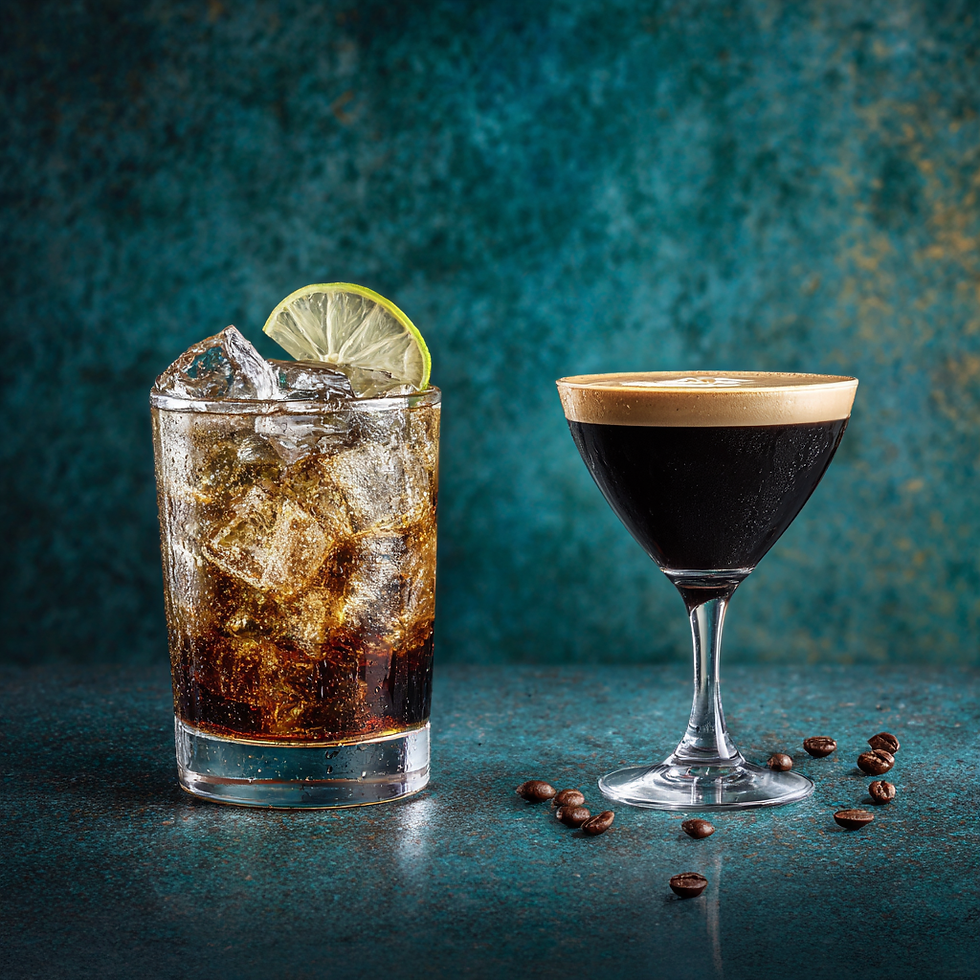
Know what's in your glass. This is where the damage hides. A Long Island Iced Tea can run 250 to 500-plus calories because it's loaded with sugary mixers and several spirits. An espresso martini lands around 300, thanks to coffee liqueur and syrup. A vodka soda? About 100 — same buzz, a third of the calories. The lesson isn't "good drinks versus bad drinks." It's that the sugary mixers and syrups pile on the calories, not the spirit itself. Even the "healthy" gin and tonic is around 150, because regular tonic water has nearly as much sugar as soda — switch to soda water or diet tonic and you cut that down.
Budget for it. If you want one or two, pick something lean and fit it into your day's calories on purpose.
Watch the munchies. This is the one that gets people. The drinks usually aren't the knockout — the late-night grazing is. I'll be honest with you: even one drink sets off cravings for me, so I plan around it. I keep low-calorie snacks on hand to take the edge off without blowing the whole day.
Bottom line
Alcohol doesn't switch off fat burning for a day, let alone a week. It nudges your metabolism for a few hours — a small effect that bounces right back. It stalls fat loss mostly by adding calories you don't account for and loosening your grip on what and how much you eat. Drink smart, plan for it, and don't fall for the myth.
References
Suter PM, Schutz Y, Jéquier E. The effect of ethanol on fat storage in healthy subjects. N Engl J Med. 1992;326(15):983–987. https://pubmed.ncbi.nlm.nih.gov/1545851/
Raben A, Agerholm-Larsen L, Flint A, Holst JJ, Astrup A. Meals with similar energy densities but rich in protein, fat, carbohydrate, or alcohol have different effects on energy expenditure and substrate metabolism but not on appetite and energy intake. Am J Clin Nutr. 2003;77(1):91–100. https://pubmed.ncbi.nlm.nih.gov/12499328/
Westerterp KR, Meijer EP, Goris AHC, Kester ADM. Alcohol energy intake and habitual physical activity in older adults. Br J Nutr. 2004;91(1):149–152. https://pubmed.ncbi.nlm.nih.gov/14748948/
Yeomans MR. Alcohol, appetite and energy balance: is alcohol intake a risk factor for obesity? Physiol Behav. 2010;100(1):82–89. https://pubmed.ncbi.nlm.nih.gov/20096714/
Caton SJ, Ball M, Ahern A, Hetherington MM. Dose-dependent effects of alcohol on appetite and food intake. Physiol Behav. 2004;81(1):51–58. https://pubmed.ncbi.nlm.nih.gov/15059684/
Rose AK, Hardman CA, Christiansen P. The effects of a priming dose of alcohol and drinking environment on snack food intake. Appetite. 2015;95:341–348. https://pubmed.ncbi.nlm.nih.gov/26210606/
Hall KD, Heymsfield SB, Kemnitz JW, Klein S, Schoeller DA, Speakman JR. Energy balance and its components: implications for body weight regulation. Am J Clin Nutr. 2012;95(4):989–994. https://pubmed.ncbi.nlm.nih.gov/22434603/
About the Author
Edward Orshansky, M.D. is a board-certified Family Medicine physician and a member of the Alpha Omega Alpha Honor Medical Society, with over 10 years of experience in Hospital Medicine, Urgent Care, and Primary Care. He is the Founder of formidableMD. After losing 85 pounds himself, his mission is to help patients reach their healthiest selves — before they ever become hospital patients. His focus is weight management, longevity, and hormonal health.
This article is for educational purposes only and does not constitute medical advice. Always consult a qualified healthcare provider before making changes to your health regimen.


Comments